
The automobile industry is about to undergo a massive transformation that will leave all the old things behind. The real hero of this entire boom is the Solid-State Battery EV Range 2027. If we look at it, Electric Vehicles (EVs) have carved out their place in the market, but even today, one question remains in the minds of even the most experienced people—”What if the battery runs out on the way?” This is called ‘Range Anxiety’. But now there’s no need to worry, because the Solid-State Battery EV Range 2027 is coming to say goodbye to this fear forever.
Be it the global market or our own USA, 2026-27 is being considered the “Golden Era” of the battery world. This isn’t just a minor engine update, but a real revolution that will change everything. Preparations are such that in the coming time, the Solid-State Battery EV Range 2027 will become the identity of every vehicle.
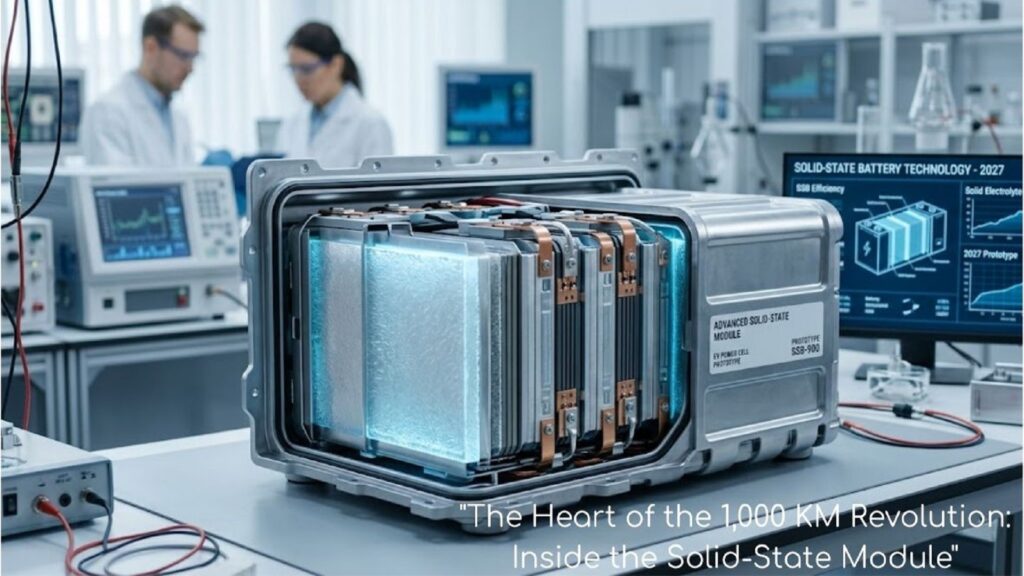
Now the fear of running out of battery is over forever: The magic of solid-state batteries looks set to reach 2027.
Look, it’s simple—all the electric vehicles we drive right now have the same old lithium-ion batteries. They’re filled with a “liquid” (an oil-like substance). But times are changing! With the Solid-State Battery EV Range 2027, that old liquid will disappear and be replaced by a stronger “solid rock” (ceramic)-like material.
Do you know its true magic? These batteries are a storehouse of energy, and on top of that, the biggest stress—the risk of fire (thermal runaway)—is virtually nonexistent. This means that with the Solid-State Battery EV Range 2027, your safety is completely guaranteed and you’ll get such power that all your old vehicles will seem useless. Simply put, the Solid-State Battery EV Range 2027 means “Double Power, Zero Tension.”
The Analysis: Why 2027 is the Turning Point?
For the past several years, solid-state batteries were confined to labs, but now they have entered the “pilot production” stage. Discussion about the Solid-State Battery EV Range 2027 is gaining momentum in the USA market because startups and major automakers have established a supply chain.
1. Energy Density: The Real Game Changer
Right now, the battery capacity of expensive cars like Tesla Model S that we see is limited to around 250-300 Wh/kg. But friends, the Solid-State Battery EV Range 2027 will completely change this scene as this capacity will directly touch 500 Wh/kg. Imagine how much power the Solid-State Battery EV Range 2027 will pack! All the old batteries are now going to be left behind in front of this Solid-State Battery EV Range 2027 technology. This simply means that the battery will weigh less but its power will double. This is a quintessential upgrade that will redefine the entire transport sector.
2. Fast Charging: Faster Than Your Coffee Break
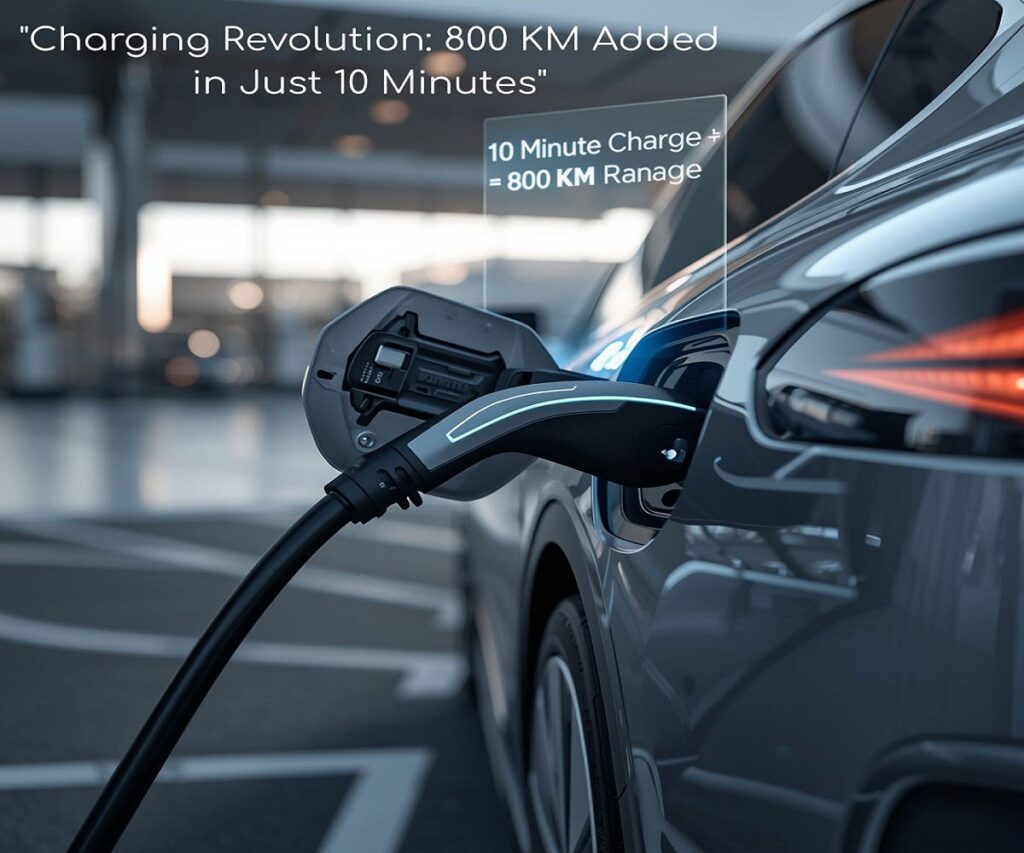
The biggest hurdle for Electric vehicles is charging time. Solid-state technology will obliterate this issue. Latest reports suggest that cars with solid-state battery EVs by 2027 will charge from 10% to 80% in just 10 minutes. This will be a similar experience to filling up fuel at a petrol pump.
Top Players Driving the 1,000 KM Dream
Here are some of the names in the USA and global automobile sector that are working tirelessly to make the Solid-State Battery EV Range 2027 a reality:
Toyota: Toyota has already started the real game! By 2027-28, the company is poised to create a formidable market disruption. With a massive range of 1,200 km, Toyota has openly declared who the real ‘player’ is. All other brands will simply watch, while Toyota will leave them all behind.
QuantumScape (USA): This startup, in partnership with Volkswagen, is working on a solid-state separator. Their focus is on the USA market to make long-distance driving hassle-free through Solid-State Battery EV Range 2027.
Samsung SDI: Big bang from Samsung! Their ‘All-Solid-State’ batteries, which will only be found in luxury Electric Vehicles, are coming by 2027.
And durability? Well, more than 20 years of battery life! Samsung has made it clear that the future is going to be ‘solid.
A little sense with passion: What is the truth?
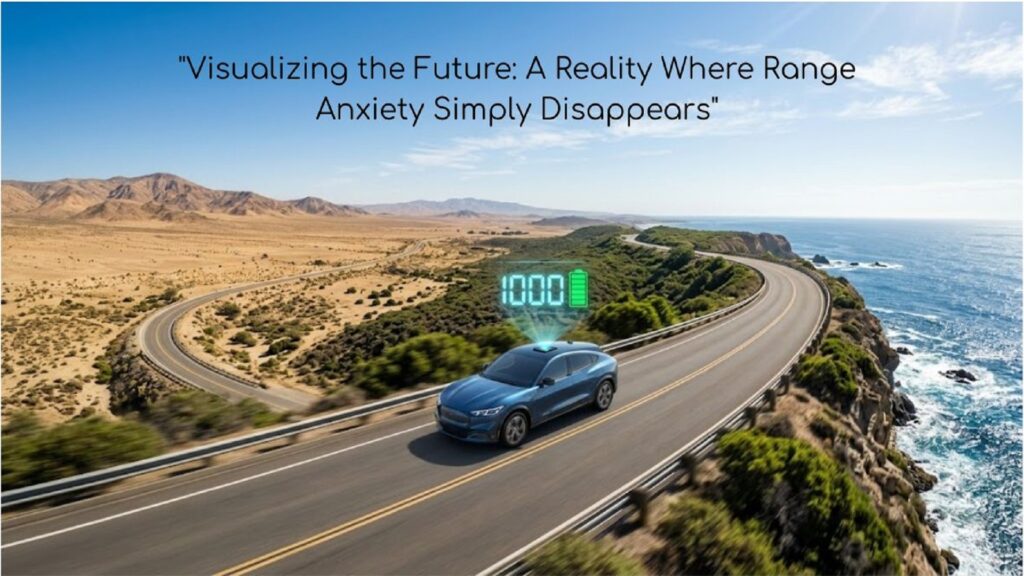
But wait a minute, because the range shown in the picture is a bit far from the reality! Toyota’s 1,200 KM range may sound like a magical story, but there are still many big challenges in the way of reality.
First big blow: A burden on the pocket!
Producing these solid-state batteries is no child’s play. Initially, their manufacturing costs are going to be 3-4 times higher than today’s lithium-ion batteries. This simply means that these batteries won’t be in any average person’s hatchback or budget car until 2027. Rather, it will only enhance the prestige of the rich’s luxurious cars like the Lexus and Cadillac. Meaning, for the common man, this technology is still a mere doormat.
The second biggest stress: The internal conflict within the battery!
In scientific terms, these solid materials suffer from a strange disease called dendrites. These are like tiny, sharp crystals that gradually form within the battery, until one day they cause a short circuit within the battery. Consider these to be the battery’s very core. There are enemies who are capable of disrupting the system from within.
The Great War of Production, From the Lab to the Street: Making a single battery in the lab is one thing, and producing batteries for millions of cars is quite another. The success of the Solid-State Battery EV Range 2027 will depend on how quickly factory lines are set up.
Its Impact on the USA Sector
People in the USA prefer large SUVs and trucks, which require a lot of energy to operate. Installing heavy battery packs in current EVs increases the car’s weight. The Solid-State Battery EV Range 2027 is the perfect solution to this problem. Lightweight batteries will drastically improve both the towing capacity and range of trucks like the Ford F-150 Lightning or Chevrolet Silverado.
Furthermore, the USA government is focusing on “Green Energy,” in which the Solid-State Battery EV Range 2027 is expected to receive incentives. If this technology is successful, the second-hand EV market will also boom because solid-state batteries have a very long life.
A 1,200 KM range: would you wait that long?
The point is this, friends: If you want to buy a car today, relying on lithium-ion is a wise decision. But if you’re after ‘Next Gen’ technology and long-term driving, waiting until 2027 will be a total ‘value-for-money’ decision!
This change isn’t just about adding kilometers—it’s a new era for car safety, longevity, and your comfort. When solid-state vehicles hit the road in 2027, this ‘battery drain fear’ (Range Anxiety) will be a thing of the past.
DISCLAIMER:The information provided in this blog is based on current trends and future projections in the automobile industry. Solid-state battery technology is still in the development stage and mass production dates, range, and cost are subject to change. Be sure to check official brand updates before making any investment or purchase decisions.